Why Sintered Stone Basins Hide Limescale
Limescale is unavoidable if you live in a hard water area. The question isn't whether it appears — it's whether your basin makes it obvious. Sintered stone doesn't.
The Problem with Most Basins
Most bathroom basins are made from glazed ceramic or polished stone resin. Both materials share the same problem: a smooth, glossy or semi-gloss surface that catches light evenly. When limescale deposits build up on that surface, they interrupt the reflection. The contrast is immediate and obvious — white haze against a dark-veined marble, chalky tide marks on a bright white ceramic bowl.
In hard water areas — which covers most of London, the South East, and large parts of the Midlands and East Anglia — this isn't an occasional inconvenience. It's a daily reality. A basin can look clean first thing in the morning and noticeably marked by the end of the day, simply from water drying on the surface after use.
Why Sintered Stone Is Different
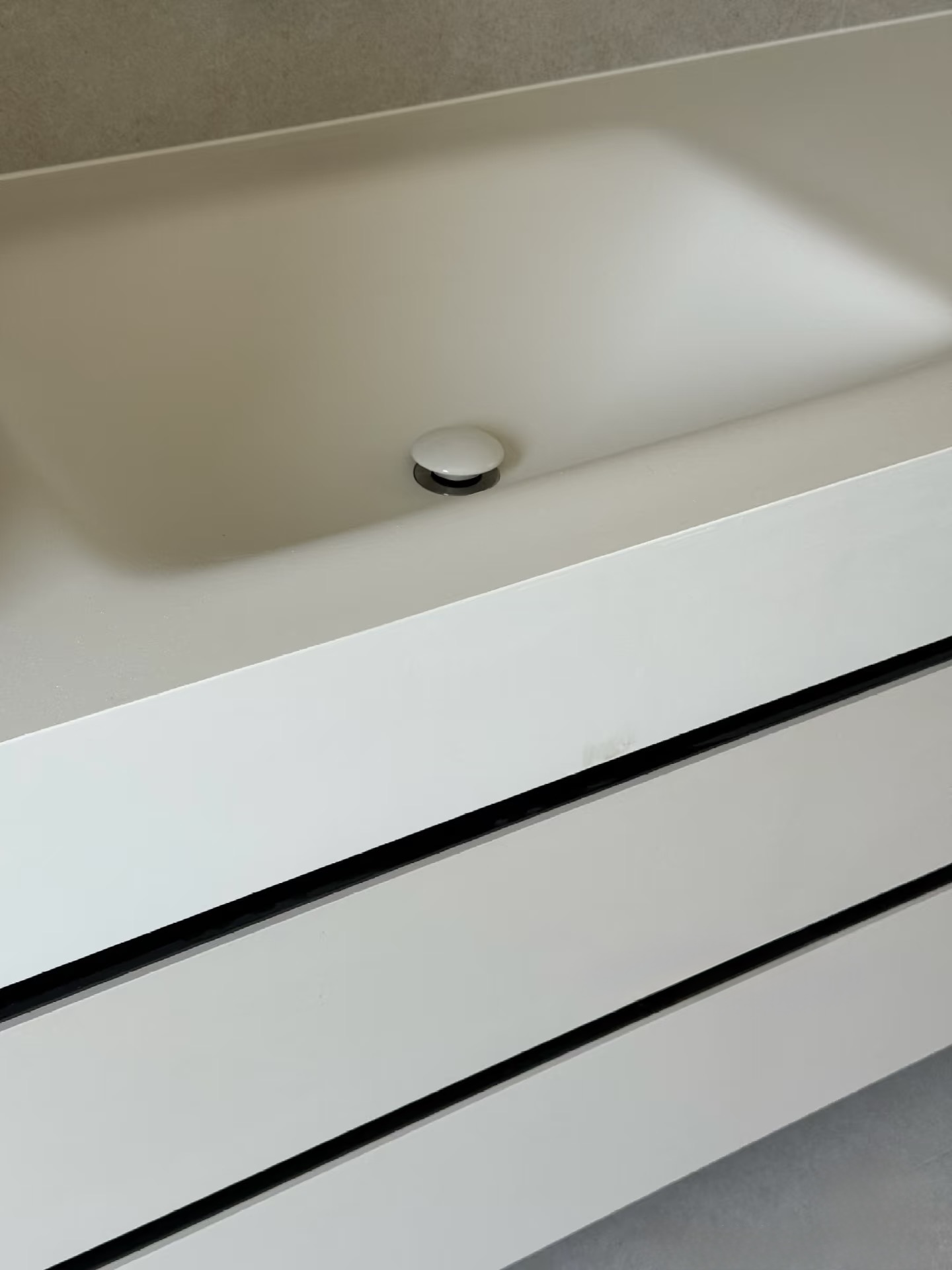
The key is in how the surface interacts with light. Sintered stone has a fine, matte mineral texture — compressed natural minerals fired under extreme heat, producing a surface that diffuses light rather than reflecting it directly. When you look at a sintered stone basin, there is no single clean reflection to interrupt.
Limescale is calcium carbonate — a white mineral deposit. When it dries on a sintered stone surface, the way it scatters light is remarkably similar to how the stone itself does. The deposit reads as part of the material rather than as a mark on top of it. It doesn't disappear, but it becomes almost invisible in normal use — something you wouldn't notice unless you were looking for it.
On a glossy ceramic basin, limescale stands out because the surface says: I should be perfectly even. On sintered stone, the surface already has a natural mineral character that absorbs variation. It simply looks like stone.
The Matte Surface Does More Than Hide Marks
The same property that makes limescale invisible also makes water spots, soap residue and general daily use far less apparent. Glossy surfaces are demanding — every fingerprint, every water drop, every minor splash is visible because the surface is trying to be a mirror. A matte mineral surface is forgiving by nature.
This matters practically. Most basins look their best on the day they're installed and gradually show the reality of daily use from there. A sintered stone basin looks essentially the same three years in as it did on day one — not because nothing has touched it, but because the surface doesn't exaggerate normal wear. A bespoke vanity unit built around that basin compounds the effect: when every surface is chosen for longevity rather than lowest cost, the whole room ages better.
When You Do Clean It
Sintered stone is also non-porous, which is significant for limescale management. On porous materials — marble especially — limescale doesn't just sit on the surface, it can begin to etch into it over time. Acid cleaners dissolve the calcium but can damage the stone. The deposit and the fix both cause harm.
On sintered stone, limescale has nothing to grip. A damp cloth removes most of it. For heavier build-up, a mild descaler wiped on and rinsed off works completely — there's no risk of etching because the surface has a Mohs hardness of around 7 and contains no material that reacts to mild acids. Clean it when you choose to, without worrying about what the cleaner will do.
This ease of cleaning is one of the reasons integrated sintered stone basins — where the bowl and countertop are one seamless piece — are so practical. There are no joins, no caulk lines, and no edges where limescale and soap scum can accumulate. The whole surface wipes clean in one pass.
What This Looks Like in Practice
Clients in hard water areas consistently comment on this. A bathroom that previously needed wiping down every day or two stays looking good with a once-a-week clean. Not because limescale stopped forming, but because it stopped being visible between cleans.
The result is a bespoke bathroom basin that holds its appearance with much less effort — which is exactly what a well-designed bathroom surface should do. It should work with the reality of how bathrooms are used, not against it. Paired with the right basin size and proportion, the surface becomes a background detail rather than a maintenance task.
Design a Basin That Stays Looking Good
Configure your Lave sintered stone basin — choose width, bowl size, finish and veneer. Full quote within 48 hours.
Start DesigningCommon Questions
- Does sintered stone show limescale?
- Much less than ceramic or marble. Sintered stone's matte mineral texture diffuses light in the same way limescale deposits do, making marks nearly invisible in normal use. It doesn't eliminate limescale, but it stops it being obvious between cleans.
- How do you remove limescale from sintered stone?
- A damp cloth removes most deposits. For heavier build-up, a mild descaler wiped on and rinsed off is sufficient. There is no risk of etching — sintered stone is non-porous and unaffected by mild acids.
- Is sintered stone a good basin material for hard water areas?
- Yes. The non-porous surface prevents limescale from etching in (unlike marble), and the matte texture makes deposits less visible between cleans. Clients in hard water areas consistently report much lower maintenance than with previous ceramic or stone basins.